Recoder · AI game production system
What if AI could understand an entire Unity game like an engineer?
Recoder turns project data into context, engineering workflows, and runtime evidence—instead of stopping at generated text.
Hai Tran Ngoc · AI EngineerThe problem
A Unity game does not fit inside a prompt.
Code, assets, scenes, prefabs, configurations, and runtime state live in different formats and evolve together.
A general AI sees a prompt.Recoder sees the project.
Architecture
Four layers turn game data into verifiable work.
The model does not work alone. Data, semantic context, execution, and runtime verification form one feedback loop.
Data Foundation
Extracts and normalizes code, metadata, assets, scenes, prefabs, configurations, and runtime data into a shared source of truth.
PostgreSQLMinIOIndexes
Knowledge Layer
Maps relationships between classes, functions, assets, and project state so agents retrieve the right context for each task.
Semantic contextRelationshipsMemory
Workflow Automation
Coordinates planning, tool calls, multi-step execution, human gates, streaming events, and persistent results.
PlanningTool callingStreaming
Runtime Verification
Checks generated work against the running game through traces, logs, state, screenshots, video, and oracle differences.
TraceLogsOracle diff
≠ ChatGPTUnlike ChatGPT, Recoder reads project context, calls engineering tools, and is checked against runtime behavior.
Real product evidence
From project dashboard to a single function.
These are real screenshots from the working data and analysis system—not presentation mockups.
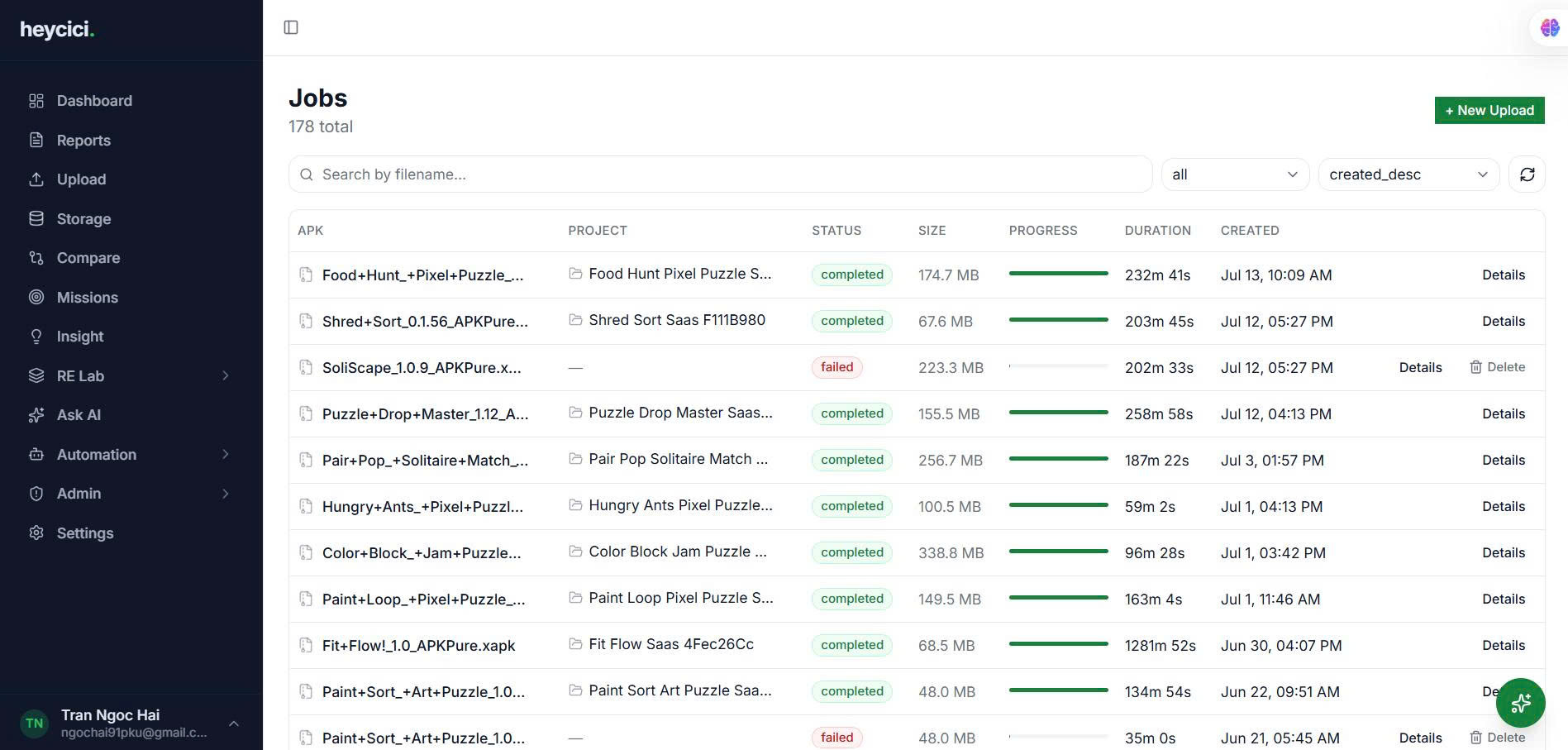
Track project ingestion and analysis pipelines.
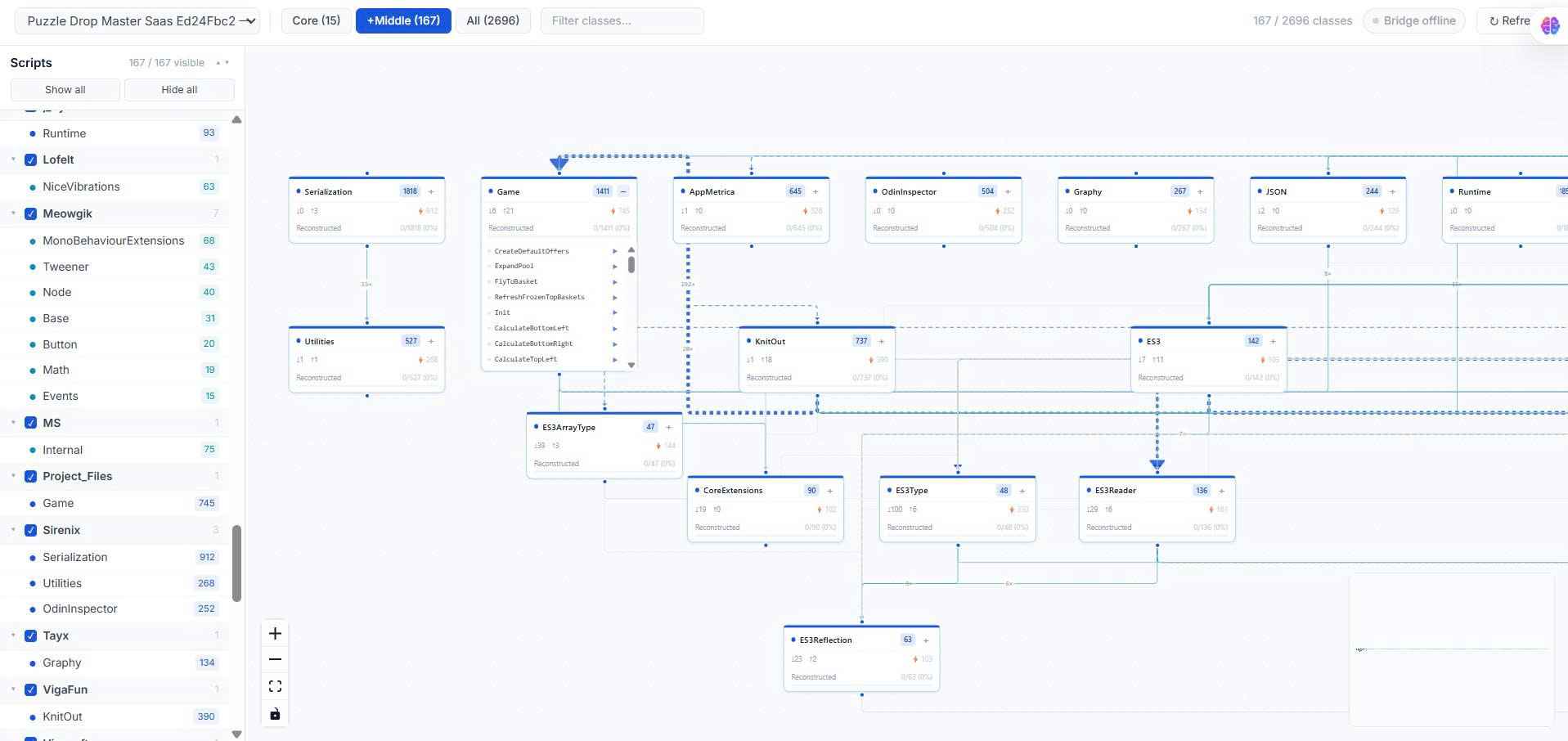
Navigate project structure and class relationships.
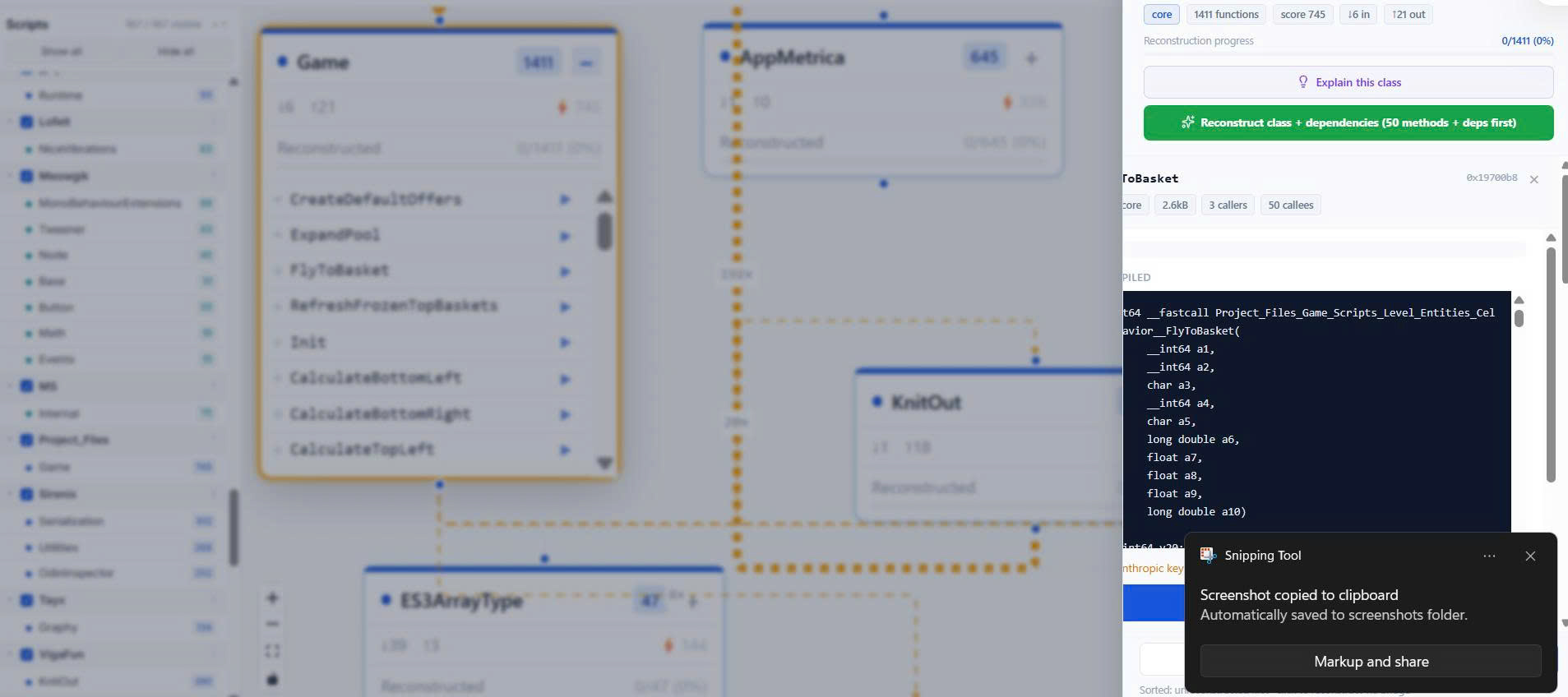
Inspect functions, reconstructed code, and dependencies.
Bridge · workflow execution
One request becomes a multi-step engineering workflow.
Bridge loads project context, plans dependencies, calls tools, streams each step, and keeps results for the next action.
Reading project context1,411 functions indexed
Resolving dependencies50 methods linked
Calling Unity toolGame systems generated
Persisting artifactresult/game-rebuild-v3
▸ Writing next event to workflow stream…
Iris · runtime verification
Find the first point where behavior diverges.
Iris places the reference trace and candidate trace side by side, then turns the earliest meaningful difference into a focused repair task.
level_bootstrap_and_first_move
EVENTORACLECANDIDATERESULT
SceneLoaded14 ms15 msPASS
BoardInitialized42 ms44 msPASS
InputAcceptedtruetruePASS
MoveResolvedscore +20score +10DIVERGED
SCREENSHOT
frame_0182
RUNTIME LOG
10:42:34 Board initialized with 24 cells
10:42:36 First divergence at MoveResolved.scoreRecoder · Data → Context → Action → Verification
Recoder compresses a production process—not just a coding task.
Data → Context → Action → Verification. The result is a workflow a small engineering team can inspect, repeat, and improve.
← Return to portfolio